Source Identification
We use a moisture meter and thermal imaging camera to find where water is entering. That means checking the sump pump, check valve, foundation walls, and any exposed PVC pipe or PEX tubing for failures.
Every job includes the core work: source identification, water extraction, structural drying, and final moisture verification. We also document everything for your insurance claim. Here is what you get when you hire us for basement water removal services in Delaware.
We use a moisture meter and thermal imaging camera to find where water is entering. That means checking the sump pump, check valve, foundation walls, and any exposed PVC pipe or PEX tubing for failures.
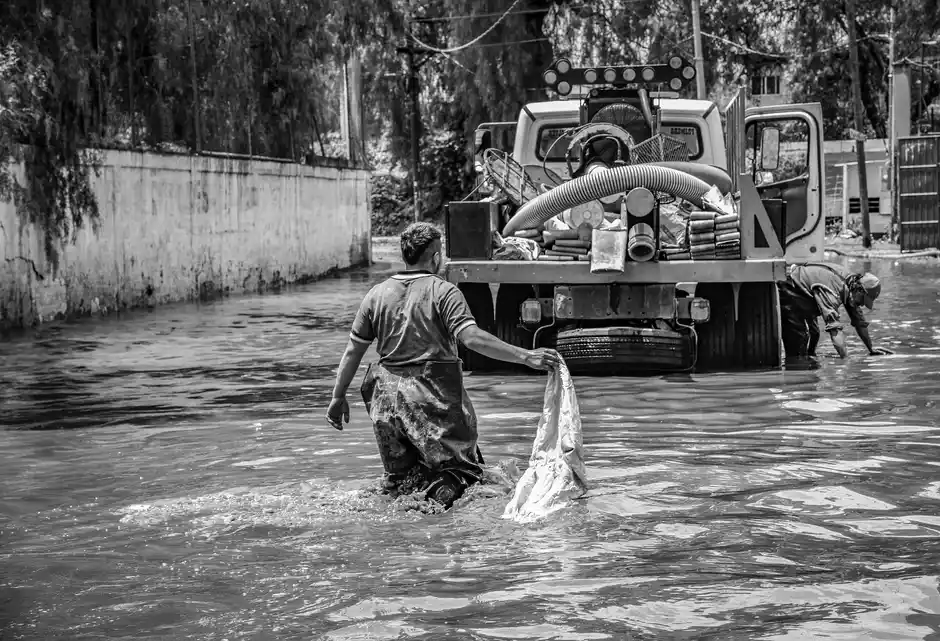
Truck-mounted water extractor for large volumes, portable water extraction unit and extraction wand for tight spaces. We pull standing water fast to stop it from wicking further into walls and flooring.
Air movers and dehumidifiers sized to your basement's cubic footage. We run them three to five days and check readings daily with a hygrometer until the structure hits a dry standard.
Daily moisture logs, photos, and a drying report formatted for insurance adjusters. This is the paperwork that gets your claim approved without back-and-forth.
We tell you what caused the flood and how to stop it. That might mean a new sump pump, a check valve replacement, pipe insulation, or a vapor barrier and crawl space encapsulation liner.
Basement Water Removal in Delaware is the process of pumping, extracting, and drying standing water from a below-grade space, then verifying with moisture meters and thermal imaging that the slab, framing, and drywall are actually dry. It is not a shop vac job. A finished basement can hold hundreds of gallons in carpet pad, baseboard, and block walls. We pull the bulk water with a truck-mounted water extractor, chase the rest with a portable water extraction unit and extraction wand, then place air movers and dehumidifiers to dry the structure to the ANSI/IICRC S500 Standard.
Delaware basements flood for predictable reasons. The water table sits high near the coast, summer storms dump two inches in an hour, and winter brings frozen pipe bursts that let loose at 2 a.m. Sump pump failure is the single most common call we get. If you are searching for emergency basement water extraction in Delaware near me, we run crews around the clock, including holidays. Every job starts with finding the source, not just vacuuming the puddle.
Every job follows the same five steps, whether it is a small seepage call in Newark or a full basement flooding cleanup in Seaford. Here is exactly what happens from the moment you call.
Schedule
Call or book online — a real human picks up and confirms a 2-hour arrival window.
Diagnose
Licensed tech inspects on-site, then walks you through the cause and your options.
Fix
The job is completed to code and done right the first time — no shortcuts, no surprises.
Guarantee
Every job backed by a written workmanship warranty — and we stand behind it.
Truck-Mounted Water Extractor
Pulls large volumes of water fast from flooded basements. Essential for jobs with hundreds of gallons standing on the floor.
Portable Water Extraction Unit
Reaches tight corners, under stairs, and crawl space edges where the truck mount cannot go. Pairs with an extraction wand for detail work.
Air Movers and Dehumidifiers
Dri-Eaz and Phoenix Restoration Equipment units sized to your basement's cubic footage. Run continuously for three to five days to dry the structure.
Moisture Meter and Thermal Imaging Camera
Finds hidden moisture behind walls and under floors. We use these to map the full extent of water damage before we start drying.
Hygrometer
Measures relative humidity in the space. We check readings daily to confirm the drying equipment is working and adjust as needed.
Submersible Sump Pump
Wayne and Zoeller pumps for emergency water removal when the existing sump pump has failed. We also install replacements and check valves.
Wet/Dry Vacuum
Shop-Vac and RIDGID units for small cleanup jobs and final passes after the extractor has pulled the bulk water.
ANSI/IICRC S500 Standard
The industry standard for water damage restoration. It defines how to classify water, size drying equipment, and verify the structure is dry. We follow it on every job and document our readings against it.
IICRC WRT and ASD Protocols
Our technicians hold IICRC Water Damage Restoration Technician (WRT) and Applied Structural Drying (ASD) certifications. That means they know how to dry a structure, not just pump water out of it.
Thermal Imaging Moisture Mapping
We use a thermal imaging camera to see temperature differences that reveal hidden moisture. This lets us find water behind walls and under floors before it becomes a mold problem.
Daily Moisture Monitoring
We check moisture readings every day with a hygrometer and moisture meter. If readings are not dropping, we adjust equipment. You get a written log for your insurance claim.
01
What we do: Call us immediately. We dispatch a crew, extract the water with a truck-mounted extractor, diagnose the pump, and start drying. We can replace the pump the same visit.
→ Water out in two to four hours, structure dry in three to five days, and a working sump pump before the next storm.
02
What we do: Shut off the main water valve and call us. We repair the burst pipe, extract the water, and dry the space. We also insulate the line to prevent another freeze.
→ Pipe repaired, water extracted, and basement dried without mold growth. Most jobs are done in three to four days.
03
What we do: That is likely hydrostatic pressure seepage or a slow leak. We use a moisture meter and thermal imaging to find the source, dry the walls, and apply waterproof sealant.
→ Dry walls, no more musty smell, and a sealed foundation that keeps moisture out.
04
What we do: Do not touch the water. Call us. We treat it as Category 3 contaminated water, extract and dispose of it properly, disinfect the space, and dry it out.
→ Contamination removed, basement disinfected and dry, and documentation for your insurance claim.
Delaware basements flood for reasons that are specific to this state. The water table is high near the coast, so hydrostatic pressure seepage is common in Sussex County. Summer storms drop two inches of rain in an hour and overwhelm sump pumps. Winter freezes pipes in unheated basements and crawl spaces, and the thaw lets loose at 2 a.m. Older housing stock in Wilmington and Dover often has cast iron drains and undersized sump pits. Newer construction in Middletown and Bear sometimes has grading issues that push water toward the foundation. We handle all of it. Whether you need emergency basement water cleanup in Delaware after a storm or a scheduled dry-out, we route the nearest crew and bring the right equipment. We know the building codes, the soil, and the weather patterns that cause basement flooding here.
Newark
Older homes near the university have original drain systems that back up during heavy rain. We see a lot of sump pump failures and root intrusion in clay tile lines.
Seaford
High water table and sandy soil mean hydrostatic pressure seepage is common. Crawl space encapsulation and vapor barriers are frequent requests here.
Ocean View
Coastal proximity means storm surge and heavy rain. Basements flood fast, and saltwater intrusion requires thorough drying and corrosion checks on equipment.
Rising Sun-Lebanon
Rural properties often have older sump systems and poor drainage. We see frozen pipe bursts in winter and storm water intrusion in spring.
Ardencroft
Wooded lots and older homes mean roof leaks and foundation seepage. We trace water with thermal imaging and fix the entry point, not just the puddle.
High water table near the coast
Hydrostatic pressure pushes water through foundation walls and cove joints. We apply waterproof sealant and install vapor barriers to block it.
Winter freeze-thaw cycles
Pipes in unheated basements and crawl spaces freeze and burst. We repair the line, extract the water, and add pipe insulation to prevent a repeat.
Summer storm surges
Two inches of rain in an hour overwhelms sump pumps and window wells. We extract fast and check your drainage before the next storm.
Older housing stock with cast iron drains
Cast iron corrodes and backs up. We camera the line, clear the blockage, and recommend replacement if the pipe is failing.
Every flooded basement has a cause. We fix the cause, not just the puddle. Here are the problems we see most often across the state and how we handle them.
Problem
Water rises fast and can flood a finished basement in under an hour. Carpet, drywall, and stored belongings are ruined if you do not act quickly.
Our Fix
We extract the water, replace the failed pump or check valve, test the discharge line, and dry the space. We can also install a backup pump so the next storm does not catch you off guard.
Problem
Water seeps through the cove joint and block walls every time the water table rises. It keeps coming back until the drainage is fixed.
Our Fix
We extract the water, dry the walls, and apply waterproof sealant. For crawl spaces, we install a vapor barrier and encapsulation liner to block moisture permanently.
Problem
A cracked pipe can dump hundreds of gallons before you notice. Water soaks into drywall, framing, and insulation, and mold can start in 24 to 48 hours.
Our Fix
We shut off the water, repair the line with PEX tubing or PVC pipe, extract the flood, and dry the structure. We add pipe insulation to prevent a repeat freeze.
Problem
Sewage is Category 3 water and a serious health hazard. It requires full disinfection and disposal of contaminated materials, not just a wet/dry vacuum.
Our Fix
We treat it as contaminated, extract and dispose of the water per Delaware Division of Public Health requirements, remove damaged material, disinfect, and dry the space.
Problem
Water can travel far from the actual leak, so you may not know where it is coming from. It soaks framing and drywall along the way.
Our Fix
We trace the leak with a thermal imaging camera, extract the water, dry the affected framing and drywall, and identify the roof entry point so you can get it sealed.

Water in a basement gets worse by the hour. Mold can start colonizing wet drywall in 24 to 48 hours, and hydrostatic pressure seepage keeps feeding the problem until the source is fixed. Here is what you actually get when you call us.
Same-Day Water Extraction
Most calls get a crew on site the same day, often within two to four hours. We stage a truck-mounted water extractor and portable water extraction unit, pull bulk water fast, and start drying the same visit. You are not waiting until Monday for a callback.
We Find the Source
Pumping water without fixing the cause means a repeat flood next storm. We use a moisture meter, hygrometer, and thermal imaging camera to trace intrusion back to a failed sump pump check valve, a cracked PVC pipe, or hydrostatic pressure seepage through the cove joint.
Drying That Passes Inspection
We dry to the ANSI/IICRC S500 Standard and document moisture readings daily. That paperwork matters when you file a claim. Our IICRC Water Damage Restoration Technician (WRT) and Applied Structural Drying (ASD) certified techs know what adjusters want to see.
Affordable, Upfront Pricing
You get a clear price before we start. Affordable basement water extraction in Delaware does not mean cutting corners on drying equipment. We size the dehumidifier and air mover count to the cubic footage of your basement, not to a flat-rate guess.
Google ★★★★★4.9
Fast response, professional crew, and they explained everything. Our basement was dry in four days and the insurance claim went through without a hitch. Highly recommend DE Water Remover Pros.
Yelp ★★★★★4.8
Called at 11 p.m. after our sump pump failed. They had a crew here by 1 a.m. Extracted the water, set up drying equipment, and checked back daily. Fair price and no surprises.
BBB ★★★★★4.9
Sewage backup in our basement. They treated it as contaminated, removed the damaged material, disinfected, and dried the space. Professional from start to finish. Glad we called them.
Google ★★★★★5.0
Frozen pipe burst in January. They repaired the line, extracted the water, and had us dry in three days. The techs were courteous and knowledgeable. Will use them again if needed.
We deliver basement water removal services in Delaware across the entire state, from New Castle County down to Sussex. Whether you are in a city or a small town, we route the nearest crew and bring the right equipment. Here are some of the communities we serve.
Basement Water Removal in Newark for older homes near the university. We handle sump pump failures, root intrusion, and storm water intrusion fast.
Basement Water Removal in Seaford for high water table properties. We extract water, dry the space, and install vapor barriers to block hydrostatic pressure seepage.
Basement Water Removal in Rising Sun-Lebanon for rural properties. We fix frozen pipe bursts, extract water, and improve drainage to prevent repeat flooding.
Basement Water Removal in Ocean View for coastal homes. We handle storm surge flooding, saltwater intrusion, and sewage backups with full safety protocol.
Basement Water Removal in Wyoming for small-town homes. We extract water, dry the structure, and repair sump pumps and check valves on the same visit.
Basement Water Removal in Frankford for rural and older homes. We trace leaks with thermal imaging, extract water, and dry the space to prevent mold.
Basement Water Removal in Houston for properties with poor drainage. We extract water, dry the basement, and recommend drainage fixes to stop future flooding.
Basement Water Removal in Ardencroft for wooded lots and older homes. We find roof leaks and foundation seepage, extract water, and dry the structure fast.
Real experiences from customers who chose our Basement Water Removal services.
“Our sump pump died during a storm and we had four inches of water in the finished basement. DE Water Remover Pros had a crew here in under three hours. They extracted everything, set up dehumidifiers, and checked readings every day for four days. The drying report made our insurance claim painless. Highly recommend.”
Karen M.
Homeowner, Newark
“Frozen pipe burst in the basement in January. They repaired the line, pulled the water, and had the space dry in three days. The techs explained everything and showed me the moisture meter readings. Fair price, no surprises. I have their number saved now.”
Dave R.
Homeowner, Seaford
“Sewage backup in the basement after heavy rain. They treated it as contaminated, removed the damaged drywall, disinfected, and dried the space. Professional from start to finish. They even helped me file the claim with my adjuster. Glad I called them instead of trying to DIY it.”
Tanya B.
Homeowner, Ocean View
Real answers to the questions we hear most often from local homeowners and property managers.
When storm flooding pushes water into your basement, we pump it out, extract the rest, and dry the structure. Flood water is contaminated, so we treat it as Category 3 and follow full safety protocol.
View Flood Water RemovalDelaware nor'easters and summer downpours overwhelm sump pumps and window wells. We extract storm water intrusion fast and check your drainage before the next storm hits.
View Storm Water RemovalStanding water in a crawl space rots floor joists and feeds mold. We extract it, dry the space, and can install a vapor barrier and crawl space encapsulation liner to keep it dry.
View Crawl Space Water RemovalStanding water in a basement is a mold clock. We pull it with a truck-mounted water extractor and portable unit, then dry the slab and walls to prevent secondary damage.
View Standing Water RemovalA sewage backup in your basement is a health hazard. We extract, disinfect, and dispose of contaminated material per Delaware Division of Public Health requirements, then dry and deodorize.
View Sewage Water RemovalA burst pipe can dump hundreds of gallons before you notice. We shut it down, repair the line with PEX tubing or PVC pipe, extract the water, and dry the space.
View Burst Pipe Water RemovalCall (833) 640-1438 any time, day or night. A live dispatcher answers, takes your address, and sends the nearest crew. Most of Delaware is inside a 60-minute response window. If you prefer email, send photos and your address to info@dcwaterremoverpros.com and we will call you back within 15 minutes.
Phone
(833) 640-1438Address
Serving Statewide, Delaware
Hours
Mon–Fri: 7AM – 7PM
Sat: 8AM – 4PM
Sun: Emergency Only
24/7 Emergency Available