Shut off your main water supply immediately, then cut power to any flooded area, and call a water removal crew. Those three moves in the first five minutes decide whether you are looking at a $1,200 cleanup or a $12,000 rebuild. Frozen pipe water damage in Delaware is a race against time - water spreads across a basement floor at roughly one foot per minute, and every minute you wait adds thousands of dollars to the repair bill.
We have walked into hundreds of Delaware homes after a winter pipe burst. The homeowners who act fast almost always come out ahead. This guide walks you through the exact first-hour steps, what to avoid, and when to hand it off to a professional crew.
Shut off the water and kill the power
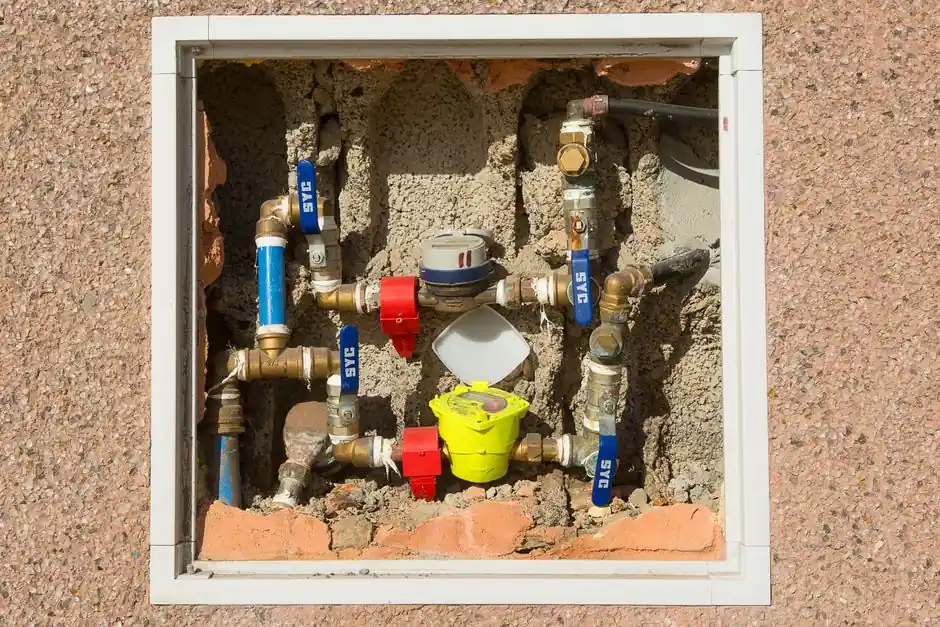
The first thing you do when a frozen pipe bursts in your Delaware home is shut off the main water valve. Find it now - before you need it. In most Delaware homes it sits near the water meter in the basement, crawl space, or a utility closet on the ground floor.
Turn the valve clockwise until it stops. If it is stuck, do not force it with a wrench - you can snap the stem and make things worse. Call our Frozen Pipe Water Removal in Delaware line and we will walk you through alternatives while a crew heads your way.
Once the water is off, kill the electricity to any room with standing water. Flip the breakers for those rooms at the panel. If the panel itself is wet or you have to stand in water to reach it, do not touch it - call an electrician or wait for our team. Water and live current kill people every winter in the Mid-Atlantic.
Open the lowest faucet in the house - usually a basement slop sink or an outdoor spigot - to drain the remaining water out of the lines. This relieves pressure and slows the leak at the break.
Find the break and start capturing water
You need to find where the water is coming from before you can contain it. Follow the wet trail. Frozen pipes almost always burst at the same weak points: along exterior walls, in unheated crawl spaces, in attics, and anywhere a pipe runs through an uninsulated rim joist.
Once you have located the break, wrap it with a towel or rubber patch and secure it with hose clamps or zip ties. This is a temporary plug, not a fix. It buys you 20 to 40 minutes while you move furniture and get extraction equipment on site.
Then start capturing water:
- Buckets, trash cans, and coolers under the active drip
- Towels and blankets along the water's leading edge to slow the spread
- A wet/dry shop vac if you have one - empty it every few gallons
- Plastic sheeting or tarps over furniture you cannot move
If the water has reached a finished basement, pull the baseboards on the wet wall. Water wicks up drywall fast - within 30 minutes it can climb 6 to 12 inches. Every inch you leave wet becomes mold food.
Why frozen pipes burst so fast in Delaware
Delaware winters sit in a nasty sweet spot. We get enough hard freezes - typically 40 to 60 nights below 28°F between December and March - to burst pipes, but not the deep, sustained cold of New England that forces builders to over-insulate. That means a lot of Delaware housing stock has pipes in places that freeze.
Water expands about 9% when it turns to ice. That expansion creates 2,000 to 3,000 PSI of pressure inside a copper or PEX line. Copper splits. PEX stretches and then cracks at the fitting. Either way, when the ice plug melts or the pipe fails, water pours out at full line pressure - 40 to 80 PSI in most Delaware municipal systems.
Older neighborhoods feel this hardest. In Water Removal in Wilmington, where rowhomes from the 1920s and 1930s still have original galvanized and copper runs along exterior walls, we see burst pipes every January. The same pattern shows up in Dover, Newark, and Middletown - anywhere the housing stock predates modern insulation codes.
Newer construction is not immune. Pipes in garage ceilings, above unheated bonus rooms, and along the exterior wall of a slab-on-grade home freeze just as fast. The difference is the water usually shows up in a different room than the pipe.
What to do while you wait for help
You have stopped the water. Now you protect what is left. Here is the order that matters:
- Move everything off the wet floor. Furniture, electronics, cardboard boxes, rugs. Cardboard wicks water and holds it against the subfloor.
- Start drying the air. Run every fan you own and any dehumidifier. Open interior doors. If it is above 40°F outside, crack a window for 10 minutes to dump humid air.
- Document everything. Photos and video of the break, the water line on the wall, and every damaged item. Your insurance adjuster will want these.
- Do not run your HVAC if the water reached the furnace or air handler. Call a technician first.
- Check the ceiling. If a pipe burst on an upper floor, water pools in the ceiling cavity. Look for sagging, discoloration, or a bulge. Poke a small drain hole with a screwdriver if it is bulging - a controlled drip beats a ceiling collapse.
If the water has spread into a finished basement, a Basement Water Removal in Delaware crew can be on site within the hour with truck-mounted extraction and commercial drying equipment. That is the difference between saving your carpet pad and replacing it.
Common mistakes that make frozen pipe damage worse
We see the same five mistakes over and over when we arrive at a frozen pipe call in Delaware. Avoid all of them.
- Using a torch or open flame to thaw the pipe. This is how house fires start. Use a hair dryer, heat gun on low, or a space heater pointed at the pipe from a safe distance.
- Turning the water back on too soon. If the pipe is still frozen downstream, you will just flood the same room again. Thaw the whole run first.
- Skipping the shop vac because the puddle looks small. Water under a vinyl floor or behind a baseboard does not show. By the time it does, you have mold.
- Waiting for the insurance adjuster before starting cleanup. Most policies require you to mitigate damage immediately. Waiting can cost you the claim.
- Assuming the pipe that burst is the only frozen one. In a hard freeze, multiple lines freeze. Check every exterior wall and crawl space run.
One more: do not pour antifreeze or de-icer down a drain to thaw a trap. It corrodes pipes and creates a hazardous spill. If your drain trap is frozen, call us.
When to call a professional
Call a professional the moment water has reached a finished surface - drywall, hardwood, carpet, or a finished ceiling. That is the line where DIY cleanup stops working. Home fans and towels cannot dry a wall cavity. Water trapped behind drywall grows mold in 24 to 48 hours, and mold remediation costs three to five times more than water extraction.
You should also call us if:
- The break is behind a wall or under a slab
- Water has reached electrical outlets, the panel, or HVAC equipment
- You see sewage backup along with the pipe water
- The crawl space is flooded and you cannot safely enter it
- You have already been running fans for 24 hours and the floor still reads wet
DE Water Remover Pros handles frozen pipe water damage across Delaware. We extract standing water, dry the structure with commercial equipment, and document everything for your insurance claim. We work directly with most major carriers and can often bill the mitigation portion straight to your policy.
How much does frozen pipe water damage repair cost in Delaware?
Typical 2026 pricing in Delaware runs $1,200 to $3,500 for water extraction and structural drying on a single-room frozen pipe loss. That covers emergency response, truck-mounted extraction, commercial dehumidifiers and air movers, and moisture monitoring over 3 to 5 days.
If the water reached a finished basement or multiple rooms, expect $4,000 to $9,000 for mitigation alone. Add $2,500 to $8,000 for drywall, flooring, and paint repairs once the structure is dry. If mold has started, add $1,500 to $6,000 for remediation.
The pipe repair itself is separate - a licensed plumber typically charges $250 to $800 to cut out and replace the failed section, depending on access. If the pipe is behind a finished wall, add $400 to $1,200 for drywall removal and replacement.
Most homeowners insurance policies cover sudden and accidental frozen pipe damage, including the water cleanup and repairs. They usually do not cover the pipe repair itself or damage from a home you left unheated for weeks. File the claim the same day - most carriers have a 24- to 72-hour reporting window for water losses.
Frequently Asked Questions
What should I do in the first hour of frozen pipe water damage in Delaware?
Shut off the main water valve, kill power to flooded rooms, and call a water removal crew. Then find the break, plug it temporarily, and start extracting water with a shop vac or towels. The first 60 minutes determine how much of your home you save.
How do I stop water damage from a frozen pipe in Delaware?
Stop the source first - main valve off, then drain the lines through the lowest faucet. Contain the water with towels and buckets, then get commercial extraction on site within 2 to 4 hours. Home fans cannot dry a wall cavity, so call a pro before mold starts at the 24-hour mark.
Who should I call for frozen pipe water damage in Delaware?
Call a licensed water removal company that handles both extraction and structural drying. DE Water Remover Pros serves all of Delaware and works directly with insurance carriers. If the pipe itself needs repair, you will also need a licensed plumber - we can coordinate both.
Does insurance cover frozen pipe water damage in Delaware?
Yes, most Delaware homeowners policies cover sudden frozen pipe damage, including water extraction, drying, and repairs. Typical coverage runs $10,000 to $50,000 on the dwelling portion. The pipe repair itself is often excluded, and damage from a home left unheated may be denied.
How do I prevent frozen pipes in Delaware?
Insulate every pipe along exterior walls and in crawl spaces. Keep cabinet doors open under sinks on exterior walls. Let a pencil-thin stream drip from the farthest faucet when temps drop below 20°F. Disconnect garden hoses by November and shut off exterior spigots. If you travel, keep the heat at 55°F minimum.
Get help with Water Removal in Delaware
If a frozen pipe just burst in your Delaware home, call DE Water Remover Pros at (833) 640-1438. We answer 24/7, dispatch crews across the state, and start extracting water the same hour you call.