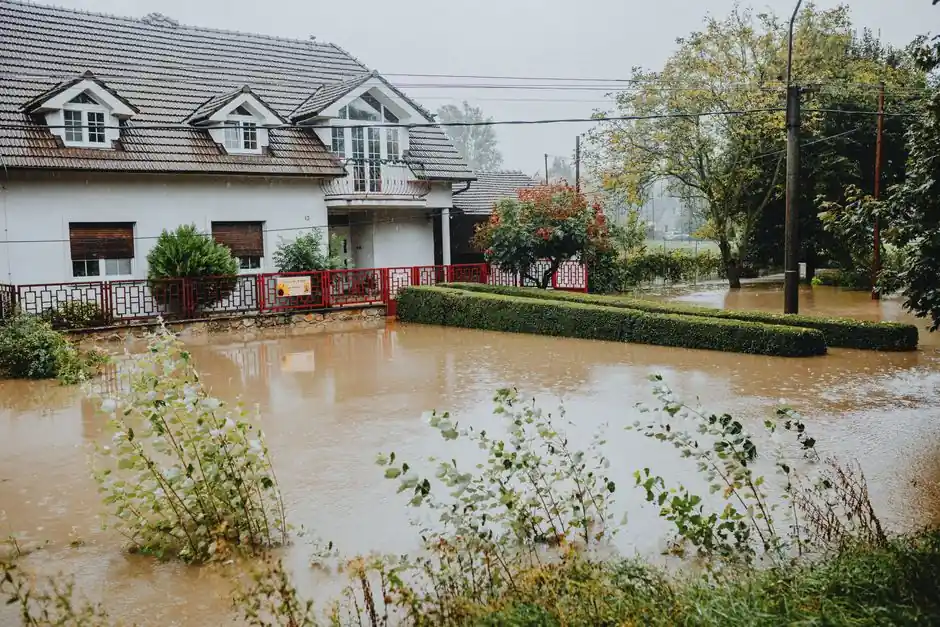
Drying out a flooded basement safely in Dover means three things happen in order: the electricity to the wet area gets shut off, the standing water gets extracted, and the structure gets dried to under 16% moisture content within 24 to 48 hours. Skip any of those and you trade a wet floor for a mold problem that costs five times more to fix.
We handle flooded basements across Kent County every week, and the difference between a two-day dry-out and a two-week rebuild almost always comes down to how fast the water leaves and how fast the air moves. Here is the exact sequence we use, plus the numbers you need to judge whether you can do this yourself or should hand it off.
Safety first: what to do before you touch the water
Before you move a single box, kill the power to the basement at the breaker panel. Water and live circuits do not mix, and a basement floor covered in an inch of water can carry current from a sump pump, a dehumidifier, or a chest freezer you forgot was plugged in.
If the panel itself sits in the flooded area, do not wade to it. Call an electrician or your utility to cut power from outside. Then work through this checklist:
- Shut off gas to any basement appliance if you smell rotten eggs or hear hissing.
- Photograph everything before you move it - adjusters want dated images of the water line on walls and furniture.
- Wear rubber boots, gloves, and eye protection. Floodwater in Dover often carries sewage from overwhelmed municipal lines, and that water is a Category 3 hazard.
- Do not run a shop vac or dehumidifier on an extension cord draped through standing water.
If the water smells like sewage rather than rain, stop and read about Sewage Water Removal in Delaware before you touch anything. Sewage backups require antimicrobial treatment that a box fan and a wet vac will not deliver.
Step 1: Stop the water source
You cannot dry a basement while water is still coming in. Identify the source before you extract anything, because pumping a basement that is still filling is wasted effort.
In Dover, the four sources we see most are a failed sump pump during a nor'easter, a cracked foundation seam after a hard freeze, a burst supply line behind the laundry, and storm water backing up through a floor drain. Each one needs a different first move. A sump failure means you need a backup pump or a generator. A burst pipe means the main water valve closes first. Storm water means you wait for the water table to drop and then address drainage outside.
If the source is a broken pipe, our team handles Burst Pipe Water Removal in Delaware with the line repair coordinated so we are not drying a floor that is about to get wet again. If it is a frozen line that let go, the same applies to Frozen Pipe Water Removal in Delaware - thaw, repair, then dry.
Step 2: Remove standing water
Standing water comes out with a submersible pump or a wet/dry vac, and the goal is to get the floor to damp rather than pooled within the first few hours. A submersible pump moves 30 to 60 gallons per minute, which is why it beats a shop vac for anything deeper than half an inch.
Work from the lowest point outward. In most Dover basements that is the floor drain or the sump pit, so set the pump there and let it pull the bulk of the water before you chase the edges with a squeegee and a wet vac.
Two things to watch:
- Pump slowly if the ground outside is saturated. Dumping 500 gallons onto a lawn that is already soaked can push water right back through the foundation.
- Pull wet carpet and pad immediately. Carpet pad acts like a sponge and will keep the concrete underneath wet for days. Pad almost never survives a flood; carpet sometimes does if it is dried within 24 hours.
If the water is only in the crawl space rather than the main floor, the approach changes - see Crawl Space Water Removal in Delaware for the containment and drying method we use under there.
Step 3: Start structural drying
Structural drying means moving air across every wet surface and pulling moisture out of the air faster than the building releases it. A single box fan in the corner will not do it. You need air movers plus a dehumidifier, and you need them running continuously.
For a typical 600-square-foot Dover basement, that means roughly four to six air movers positioned to create a circular airflow pattern, plus one LGR dehumidifier rated for the cubic footage. LGR stands for low-grain refrigerant, and it is the type that keeps pulling water out of the air even when the basement is cool and damp - a standard household dehumidifier quits being effective below about 65°F.
Set the dehumidifier to its lowest setting and empty it or run a condensate line to a drain. Check the bucket every few hours; a good LGR unit pulls 60 to 100 pints per day in a wet basement, and a full bucket shuts the whole process down.
Keep windows and doors closed. This is the mistake we see most - homeowners open the basement windows for ventilation, which on a humid Delaware day lets more moisture in than it lets out. Dry the air you have, do not import more.
Run the equipment for at least 72 hours, checking moisture readings on the concrete, the baseboards, and any wood framing. You are done when the readings match a dry reference area within 2 percentage points.
How long does it take to dry a flooded basement in Dover Delaware?
A flooded basement in Dover typically takes three to five days to dry completely, with the first 24 to 48 hours being the critical window for mold prevention. The exact number depends on how deep the water got, what materials got wet, and how fast you got equipment running.
Here is the realistic breakdown for a 2026 dry-out in Kent County:
- Water extraction: 2 to 6 hours for a standard residential basement.
- Structural drying: 3 to 5 days with professional air movers and LGR dehumidifiers.
- DIY with box fans and a household dehumidifier: 7 to 14 days, often with mold growth starting around day 4.
Concrete and block walls hold water longer than drywall. A finished basement with insulation behind the drywall can take a full week because the wall cavity has to dry from both sides. If you are not sure whether the walls are dry, a $40 pin-type moisture meter from any hardware store will tell you more than your hand will.
How do I prevent mold after a flooded basement in Dover?
Mold prevention after a flooded basement in Dover comes down to speed and moisture control: get the space under 60% relative humidity and every wet material under 16% moisture content within 48 hours. Mold spores are already in the air - they just need water and a surface to colonize.
What actually works:
- Run the dehumidifier continuously for at least 72 hours after the visible water is gone.
- Pull wet drywall to 12 inches above the water line. Drywall that got soaked and stayed soaked grows mold on the paper backing within 48 to 72 hours.
- Treat affected framing and concrete with an antimicrobial spray once the surface is dry to the touch.
- Keep humidity under 60% going forward. A $15 hygrometer tells you where you stand.
If you smell that musty, earthy odor three days after the flood, mold is already growing somewhere you cannot see. That is the point where a professional moisture survey pays for itself.
Common mistakes that turn a wet basement into a gut job
The most expensive flooded-basement mistakes are the ones that feel like common sense at the time. Here is what we see homeowners do that turns a $2,000 dry-out into a $15,000 rebuild.
- Waiting until morning. Every hour the water sits, it wicks higher into drywall and framing. The 24-to-48-hour window is real.
- Running a household dehumidifier in a cold basement. Below 65°F it barely works. You need an LGR unit.
- Opening windows to "air it out." On a humid Delaware day this makes it worse.
- Putting fans on wet carpet instead of removing it. The pad stays soaked and the subfloor never dries.
- Skipping the moisture meter. A floor that feels dry can still be at 20% moisture, which is mold territory.
- Not documenting before cleanup. Without photos, your insurance claim gets complicated fast.
If you are in an older Dover neighborhood - the blocks around The Green, or the older housing stock near Silver Lake - you are also dealing with stone foundations and no vapor barrier, which means the walls themselves hold water long after the floor is dry. That is a different drying strategy than a 1990s build with a poured concrete wall and a sump pit.
We also work with homeowners across the region, including Water Removal in Wilmington and Water Removal in Middletown, and the pattern is the same everywhere: speed beats equipment every time.
When to call a professional
Call a professional when the water is deeper than an inch, when it smells like sewage, when the flooded area is larger than about 300 square feet, or when you cannot get the space dry within 48 hours. Those are the four conditions where DIY drying almost always fails.
Our team at DE Water Remover Pros handles the full job - extraction, structural drying, moisture monitoring, and antimicrobial treatment - with commercial LGR dehumidifiers and air movers that move 10 times the air of a box fan. We also handle the insurance documentation so you are not fighting the adjuster alone.
If you are dealing with a sump pump that quit during the last storm, our Sump Pump Failure Water Removal in Delaware service covers the extraction and the drying, and we can advise on a backup system so it does not happen again next spring.
For the broader picture of how we handle water damage across the state, our Water Removal in Delaware page covers every service and every city we serve.
Frequently Asked Questions
How do I dry out a flooded basement safely in Dover Delaware?
Shut off power to the basement first, then extract standing water with a submersible pump, then run air movers and an LGR dehumidifier continuously for 3 to 5 days. Keep windows closed and monitor moisture readings until the structure is under 16% moisture content.
How long does it take to dry a flooded basement in Dover?
Three to five days with professional equipment. DIY with box fans and a household dehumidifier takes 7 to 14 days, and mold can start growing around day 4. The first 48 hours matter most.
What equipment do I need to dry a flooded basement in Dover?
A submersible pump or wet/dry vac for extraction, four to six air movers for a 600-square-foot space, one LGR dehumidifier, a moisture meter, and a hygrometer. Household dehumidifiers stop working effectively below 65°F.
How do I prevent mold after a flooded basement in Dover Delaware?
Get every wet material under 16% moisture and the air under 60% relative humidity within 48 hours. Pull wet drywall to 12 inches above the water line, treat framing with antimicrobial spray, and keep a dehumidifier running for at least 72 hours.
When should I call a professional to dry out my basement in Dover?
Call when water is deeper than an inch, smells like sewage, covers more than 300 square feet, or is not dry within 48 hours. Sewage-contaminated water is a Category 3 hazard that requires professional antimicrobial treatment.
Get help with Water Removal in Dover
If your basement is wet right now, the clock is running. We extract the water, dry the structure, and document everything for your insurance claim - usually starting the same day you call.
Call DE Water Remover Pros at (833) 640-1438 and we will get a crew to your Dover basement today.