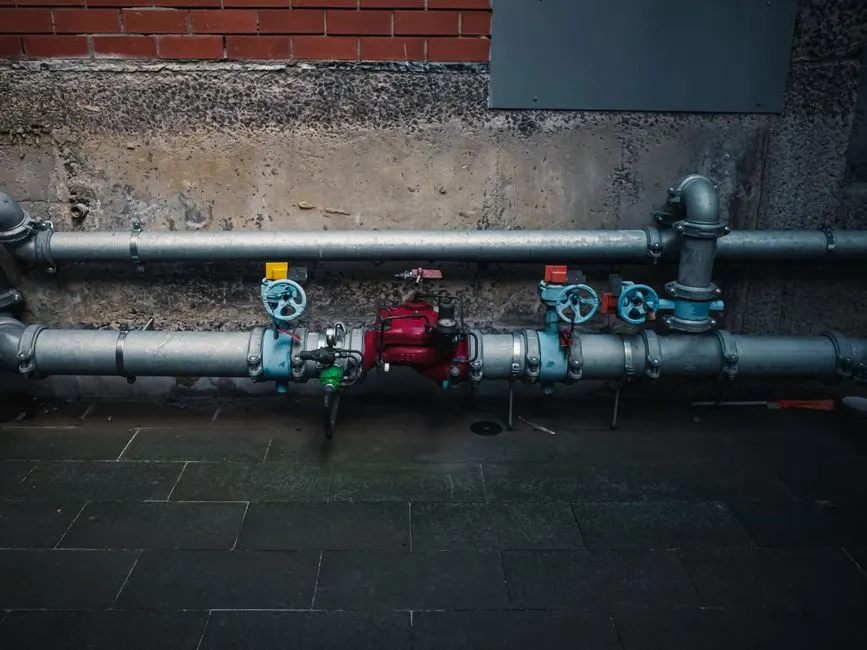
Shutting off your water main before a burst pipe floods your home means locating the main shut off valve - usually in the basement, crawl space, or near the water meter - and turning the handle clockwise until it stops. That single action can stop 8 to 10 gallons per minute from pouring into your house. In this guide, we walk through exactly where that valve lives in Delaware homes, how to turn it, and what to do in the first five minutes after a pipe lets go.
Why every Delaware homeowner needs to know this before winter
Delaware sits in a freeze zone. From late November through early March, overnight temperatures in Wilmington, Newark, and Dover regularly drop into the low 20s and teens, and pipes in unheated crawl spaces, garages, and exterior walls freeze fast. When water freezes, it expands about 9 percent - enough to split copper, CPVC, and even PEX. The pipe doesn't leak while it's frozen. It leaks when it thaws and the pressure releases.
That's why the emergency almost always happens on the first warm morning after a cold snap. You wake up, the ice plug melts, and water starts spraying behind a wall or under a sink. If you don't know where your shut off valve is, you're standing in an inch of water by the time you find it.
Knowing how to shut off water main Delaware homeowners rely on isn't just a winter skill. It matters year-round - supply lines to washing machines and dishwashers fail, water heaters rust through, and older galvanized pipes in pre-1970s Wilmington rowhouses corrode from the inside out.
If you've already got water where it shouldn't be, our team handles Burst Pipe Water Removal in Delaware and can be on-site the same day. But the best outcome is stopping the water before it spreads - and that starts with the valve.
Where is the water main shut off valve in my Delaware home?
The water main shut off valve in a Delaware home is typically located where the main water line enters the house - most often in the basement on the front wall, in a crawl space, in a utility closet near the water heater, or inside a ground-level box near the foundation. In homes without basements, look for it under the kitchen sink, in the garage, or behind an access panel.
Here's where we find them most often, by housing type:
- Basement homes (most of New Castle County): On the wall facing the street, usually within 3 to 5 feet of where the pipe comes through the foundation. Look for a brass or chrome valve with a round or lever handle.
- Crawl space homes (Kent and Sussex County): Often just inside the crawl space access hatch, sometimes under insulation. You may need a flashlight and a knee pad.
- Slab and townhome builds: In a utility closet, behind the water heater, or in a small access panel in the garage wall.
- Older Wilmington rowhouses: Frequently in the basement near the front steps, sometimes behind a finished wall panel that a previous owner added.
If you can't find it, follow the pipe. Start at the water heater - the cold line feeding it traces back to the main. Or check outside: many Delaware homes have a curb-stop valve near the sidewalk under a small round or rectangular lid. That's the city or utility side, and you usually need a special key to turn it.
While you're mapping your plumbing, it's worth knowing where your other shutoffs are too. Homes in Water Removal in Wilmington that we service often have separate valves for outdoor spigots, the irrigation line, and the water heater - and knowing those saves time in an emergency.
How to turn off water main to prevent flooding in Delaware: step by step
Turning off the water main takes about 30 seconds once you know where the valve is. Here's the sequence we walk homeowners through on the phone:
- Turn off the water heater. If it's gas, set the dial to "pilot." If it's electric, flip the breaker. A drained or empty tank with the burner still running can crack the tank or burn out the element.
- Find the main valve. It's the one on the pipe coming in from the street - not the one feeding a single fixture.
- Turn it clockwise. For a round wheel handle, turn right until it stops. For a lever handle, rotate it 90 degrees so it's perpendicular to the pipe.
- Open a low faucet. Crack the lowest faucet in the house - usually a basement sink or laundry tub - to drain pressure off the lines. This also confirms the water is actually off.
- Check the meter. If you have a meter with a leak indicator (a small triangle or dial), watch it for 60 seconds. If it's still spinning, water is still moving somewhere.
Ball valves (lever handles) are the easiest - a quarter turn and you're done. Gate valves (round wheels) can take 5 to 10 full turns and sometimes seize if they haven't been exercised in years. If yours won't budge, don't force it with a pipe wrench; you can snap the stem and turn a $50 repair into a $500 one.
What tools you need (and what to do if the valve won't budge)
You don't need a full plumbing kit to shut off a water main. You need four things, and they should live in one spot you can find in the dark:
- A flashlight or headlamp (crawl spaces and basements are dim)
- A pair of channel-lock pliers or an adjustable wrench
- A towel or small bucket for the drip when you open the drain faucet
- A tag or piece of tape to mark the valve so the next person can find it
If the valve is stuck, try this order: spray a little penetrating oil on the stem, wait 10 minutes, then try again with steady pressure - not a jerk. If it still won't move, call a plumber. Forcing a seized gate valve is one of the most common ways homeowners turn a slow drip into a full-bore flood.
Once you've got the valve working, exercise it twice a year. Open and close it fully in spring and fall. Valves that sit untouched for a decade are the ones that fail when you need them most.
What should I do first if a pipe bursts in my Delaware home?
If a pipe bursts in your Delaware home, shut off the water main first, then kill power to any flooded area, then call for help. Water first, because every second the main is open adds roughly a gallon every 6 to 8 seconds to the mess. Power second, because standing water plus live outlets is a shock hazard.
Here's the order we recommend:
- Shut off the main. Same clockwise turn as above.
- Kill power to wet areas. Only if you can reach the breaker panel without stepping in water. If the panel is in the flooded basement, don't go in - call the fire department's non-emergency line.
- Open faucets to drain the lines. This reduces the amount of water still in the pipes above the break.
- Document everything. Photos and video of the damage, the pipe, and any ruined belongings. Your insurance adjuster will want them.
- Call a water removal company. Mold can start growing on wet drywall and carpet in 24 to 48 hours. Extraction and drying need to start the same day.
If the water has already spread across a floor, our Standing Water Removal in Delaware crews pump, extract, and dry - usually finishing the extraction phase within a few hours of arrival.
Common mistakes that turn a small leak into a flooded house
We've walked into hundreds of water-damaged homes across Delaware, and the same mistakes show up over and over. Avoid these:
- Turning off the wrong valve. The valve feeding the water heater is not the main. If water keeps flowing after you turn it, you've got the wrong one.
- Not killing the water heater. A gas or electric heater running on an empty tank can crack or burn out in minutes.
- Forcing a stuck valve. Snapping the stem means water keeps flowing until a plumber can get there - and now you also need a new valve.
- Waiting to call for water removal. Every hour of delay raises the odds of mold, warped hardwood, and ruined drywall. Mold doesn't need a week - 48 hours is enough.
- Assuming insurance covers everything. Most Delaware policies cover sudden burst-pipe damage but exclude gradual leaks and neglected maintenance. Document the cause.
- Not knowing where the curb stop is. If your indoor valve fails completely, the only way to stop the water is at the curb - and that usually needs the utility or a plumber with a curb key.
One more: don't run a shop vac over a flooded carpet and call it done. Surface water is the easy part. The pad underneath holds water for days, and the subfloor wicks it up. That's why we use moisture meters and thermal cameras on every job - including Basement Water Removal in Delaware calls where the floor looks dry but the meter says otherwise.
When to call a professional
Call a professional the moment water has spread beyond a small, contained area - or any time you can't find the shut off valve, can't turn it, or can't stop the flow. If the water has reached drywall, carpet, insulation, or a finished ceiling, DIY extraction won't dry it fast enough to prevent mold.
DE Water Remover Pros handles the whole sequence: we shut down the source if it's still running, extract the standing water, pull wet materials where needed, and run commercial drying equipment until moisture readings are back to baseline. We work directly with most major insurance carriers and document everything for your claim.
If you're in an area hit hard by winter pipe failures, we also run Frozen Pipe Water Removal in Delaware calls all season - those jobs often involve multiple breaks in the same wall cavity, so it pays to have someone who knows where to look.
Frequently Asked Questions
How do I shut off my water main before a burst pipe floods my home in Delaware?
Find the main shut off valve where the water line enters your home - usually the basement, crawl space, or utility closet - and turn the handle clockwise until it stops. That takes 30 to 60 seconds and stops the flow immediately. Then kill power to wet areas and call for water removal.
Where is the water main shut off valve located in a Delaware home?
In most Delaware homes it's on the front basement wall within 5 feet of where the main line enters, or in a crawl space near the access hatch. Slab homes and townhomes often have it in a utility closet or behind an access panel near the water heater.
How do I turn off the water main in an emergency in Delaware?
Turn the valve clockwise until it stops - a quarter turn for a lever-style ball valve, 5 to 10 turns for a round gate valve. Then open the lowest faucet in the house to drain pressure and confirm the water is off. Don't force a stuck valve.
What should I do first if a pipe bursts in my Delaware home?
Shut off the water main first - every second counts, since a burst line can release 8 to 10 gallons per minute. Then cut power to flooded areas if you can reach the panel safely, open faucets to drain the lines, and call a water removal company the same day.
Can shutting off the water main prevent flood damage in Delaware?
Yes - shutting off the main within the first minute or two typically limits damage to a few square feet instead of an entire floor. It won't undo water already released, but it stops the source, which is the single biggest factor in how much damage your home sustains.
Get help with Water Removal in Delaware
If a pipe has already let go, don't wait for the water to spread. Our team handles Water Removal in Delaware with same-day response, commercial extraction equipment, and direct insurance billing.
Call DE Water Remover Pros at (833) 640-1438 and we'll walk you through shutting off the main while a crew is on the way.