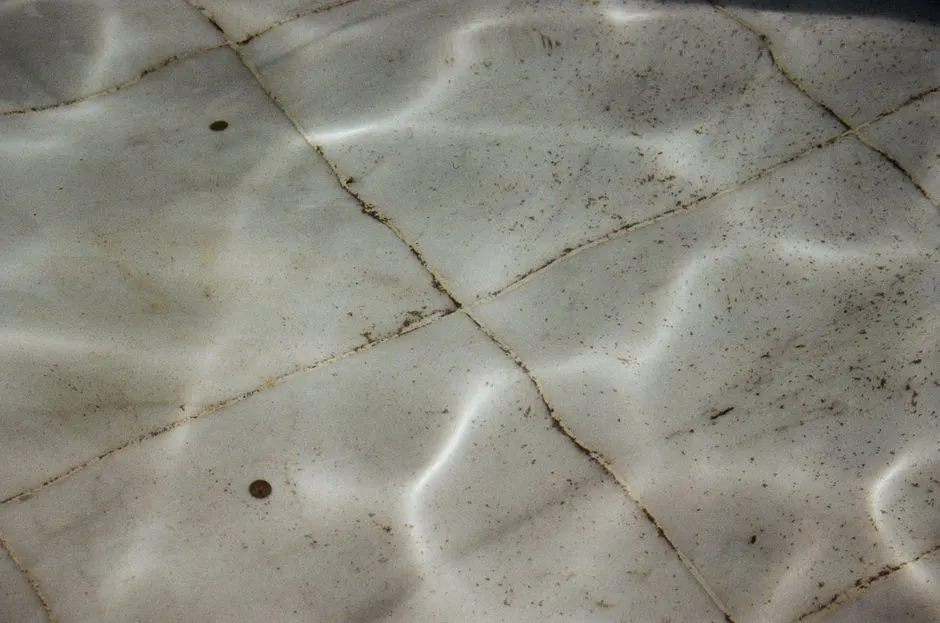
Water coming up through your basement floor in Delaware is almost always caused by hydrostatic pressure - groundwater pushing up from saturated soil beneath your foundation, not a leak in your plumbing. The water finds the path of least resistance: the seam where your slab meets the footing, a floor drain, or a hairline crack in the concrete. It seeps up, spreads across the floor, and keeps coming as long as the ground stays wet.
That distinction matters because the fix is completely different from a pipe repair. Below, we break down what causes basement floor water seepage in Delaware, how to tell it apart from a plumbing leak, and what actually stops it.
The short answer: it's usually hydrostatic pressure, not a leak
Hydrostatic pressure basement floor Delaware homeowners deal with is the force of water in saturated soil pressing against and under your foundation. When the ground around your house can't drain fast enough - after a heavy rain, a snowmelt, or a week of drizzle - that water builds up and looks for somewhere to go. Concrete is porous. It doesn't stop water; it just slows it down.
Basement floor water seepage Delaware is a category of water intrusion where water enters through the slab itself or the cove joint where the floor meets the wall, rather than through a wall crack or an overhead pipe. It's the most common form of basement water problem we see across the state.
If you're dealing with standing water on the floor right now, the priority is getting it out before it damages flooring, drywall, and stored belongings. Our team handles Basement Water Removal in Delaware with truck-mounted extraction and industrial drying, usually starting within a couple of hours of your call.
What causes water to come up through a basement floor in Delaware
There are six causes we see over and over in Delaware basements. Most homes have more than one working at the same time.
1. A high water table
Much of Delaware - especially the coastal plain from Wilmington down through Dover, Milford, and Seaford - sits on a shallow water table. In wet months, that table can rise above the level of your basement slab. When it does, water has nowhere to go but up. Homes within a mile of the Delaware Bay, the Christina River, or the tidal creeks around Smyrna and Georgetown are especially vulnerable.
2. Poor exterior grading
If the soil around your foundation slopes toward the house instead of away from it, every rainstorm sends water into the same place. The standard is a 6-inch drop over the first 10 feet from the foundation. Most of the problem basements we inspect fail that test.
3. Clogged or missing footing drains
Homes built before 1980 often have clay or cast-iron footing drains that have collapsed or filled with roots. When the perimeter drain stops working, water pools against the footing and pushes under the slab.
4. A failed sump pump
A sump pump that's undersized, clogged, or running on a dead battery is the single most common reason a dry basement suddenly floods. If your pump runs constantly during storms and the pit still fills, it's overwhelmed.
5. Hydrostatic pressure through the cove joint
The cove joint - where the floor slab meets the foundation wall - is a cold joint, not a monolithic pour. It's the first place water shows up when pressure builds underneath.
6. A plumbing leak under the slab
Less common, but real. A pinhole leak in a copper supply line or a cracked drain line under the slab will produce a constant wet spot that doesn't correlate with rain. If your floor is wet in dry weather, this is the first thing to rule out.
Why Delaware's soil and weather make this worse
Delaware basement water problems are driven by a specific combination of soil, elevation, and weather that doesn't exist in most other states. The coastal plain soils - silt loams, sandy loams, and clay-heavy fill around older developments - drain slowly. Water that falls in November is often still in the ground in February.
Add the freeze-thaw cycle. From December through March, Delaware soils expand and contract repeatedly. That movement opens hairline cracks in basement slabs and widens existing cove joints. By the time the spring rains arrive, the slab is already compromised.
Then there's the storm pattern. Delaware averages roughly 44 inches of rain per year, and the last several years have brought more single-event downpours - 2 to 4 inches in a few hours - that overwhelm municipal storm systems and residential drainage alike. We see the highest call volume in Wilmington, Newark, and Bear after those events, and again in Dover and Middletown when the tidal creeks back up.
If you're in one of those areas and your basement takes on water every time it rains hard, that's a pattern, not bad luck. Our Water Removal in Wilmington crews see it every storm season, and the fix is almost always drainage, not patching.
How to tell hydrostatic seepage from a plumbing leak
The two problems look similar on the floor but behave very differently. Here's how to sort them out before you spend money on the wrong fix.
- Timing: Hydrostatic seepage shows up during or within 24 hours of rain or snowmelt. A plumbing leak is constant, rain or shine.
- Location: Seepage appears along the cove joint, in floor cracks, or at the floor drain. A supply-line leak usually shows up in one spot and spreads outward.
- Volume: Seepage is slow - a sheen, a damp patch, maybe a thin film of water. A burst supply line can put down an inch of water in an hour.
- Smell: Seepage smells like wet dirt or musty concrete. A drain leak smells like sewage. A supply leak has no smell at first.
- The meter test: Shut off every fixture in the house and watch your water meter for 15 minutes. If the dial moves, you have a plumbing leak. If it doesn't, the water is coming from the ground.
Run that meter test first. It takes 15 minutes and saves you from paying for a drainage fix when you actually need a plumber - or the reverse.
How to stop water coming up through your basement floor in Delaware
Stopping basement floor water seepage repair in Delaware means managing water before it reaches the slab, not sealing the slab itself. Paint-on waterproofing and hydraulic cement are temporary at best - hydrostatic pressure will find a new path within a season or two.
Here's the order we recommend, from least to most invasive:
- Fix the grading. Add clean fill against the foundation so the soil slopes away at 6 inches per 10 feet. Cost: $300-$1,200 for most homes.
- Extend downspouts. Discharge at least 6 feet from the foundation, ideally onto a splash block or into a buried line. Cost: $15-$40 per downspout.
- Clean or replace the footing drain. A perimeter French drain with a filter fabric and gravel bed runs $3,000-$8,000 depending on linear footage and access.
- Install or upgrade the sump system. A primary pump plus a battery backup, discharging to a frost-proof line, runs $1,200-$2,800 installed.
- Interior drainage channel. A perimeter channel cut into the slab and tied to the sump pit is the most reliable fix for chronic cove-joint seepage. Expect $4,000-$9,000.
- Exterior waterproofing membrane. Only worth it during a full excavation for another reason - the cost rarely justifies it on its own.
If water is already in the basement, none of that matters until the space is dry. Standing water under a slab or in a low corner will keep wicking into drywall and framing for weeks. Our Standing Water Removal in Delaware service pulls the water out, verifies moisture levels in the slab and walls, and dries the space so the repair work can actually hold.
Common mistakes homeowners make
We've pulled equipment out of hundreds of Delaware basements, and the same five mistakes show up again and again.
- Sealing the floor first. Epoxy coatings and hydraulic cement crack within a season under hydrostatic pressure. Fix drainage first, then seal.
- Running a shop vac for hours. A wet/dry vac pulls maybe 5 gallons before you're emptying it. It doesn't dry the slab, and it doesn't touch water under the floor.
- Skipping the dehumidifier. A wet slab releases moisture for 2-4 weeks. Without a commercial dehumidifier running, you'll get mold in the framing and joists.
- Assuming homeowners insurance covers it. Most Delaware policies exclude groundwater and hydrostatic seepage. Flood insurance through NFIP covers surface flooding, not water rising from below the slab. Read your policy before you file.
- Waiting for it to dry on its own. Delaware humidity in spring and fall runs 70-85%. A wet basement in April is still wet in June.
When to call a professional
Call us when the water is more than a damp patch, when it's returned after two or more rainstorms, or when you can't tell whether the source is the ground or a pipe. Those are the three situations where DIY approaches cost more than they save.
We handle the water removal and drying side of the problem - extraction, moisture mapping, dehumidification, and documentation you can hand to your insurance adjuster. We also tell you straight whether the underlying cause is a drainage issue, a sump failure, or something a plumber needs to look at. If it's a burst or frozen supply line, we handle that too, including Burst Pipe Water Removal in Delaware for the sudden, high-volume events that need extraction within the hour.
What we don't do is sell you a waterproofing system you don't need. If grading and a new sump pump will solve it, that's what we'll tell you.
Frequently Asked Questions
Why is water coming up through my basement floor in Delaware?
Hydrostatic pressure from a high water table or saturated soil is the cause in roughly 8 out of 10 cases. Groundwater pushes up through the cove joint, floor cracks, or the slab itself. Delaware's shallow water table and 44 inches of annual rain make it common statewide.
How do I stop water from coming up through my basement floor in Delaware?
Fix exterior grading and downspouts first, then address the footing drain and sump system. For chronic cove-joint seepage, an interior drainage channel tied to a sump pit is the reliable fix. Sealing the floor alone fails within 1-2 seasons.
Is water coming up through my basement floor a sign of a bigger problem in Delaware?
Usually yes. It signals that your foundation drainage has stopped working, which means water is also sitting against your footings and under the slab. Left alone, that leads to slab movement, wall cracks, and mold in the framing within 6-12 months.
Can hydrostatic pressure cause water to come up through a basement floor in Delaware?
Yes - that's the primary mechanism. When the water table rises above your slab level, typically after 2+ inches of rain or a spring snowmelt, the pressure forces water through the concrete and the cove joint. It stops when the ground drains, not when the rain stops.
Who should I call for water coming up through my basement floor in Delaware?
Call a water removal company first to extract and dry the space, then a foundation drainage contractor for the permanent fix. DE Water Remover Pros handles the extraction and drying, and we'll tell you whether you also need a plumber or waterproofing specialist.
Get help with Water Removal in Delaware
If water is coming up through your basement floor right now, every hour it sits raises the cost of the repair. We extract the water, dry the space, and identify the source so it doesn't happen again next storm.
Call DE Water Remover Pros at (833) 640-1438 - we answer 24/7 and can usually have a crew at your door within a couple of hours anywhere in Delaware.